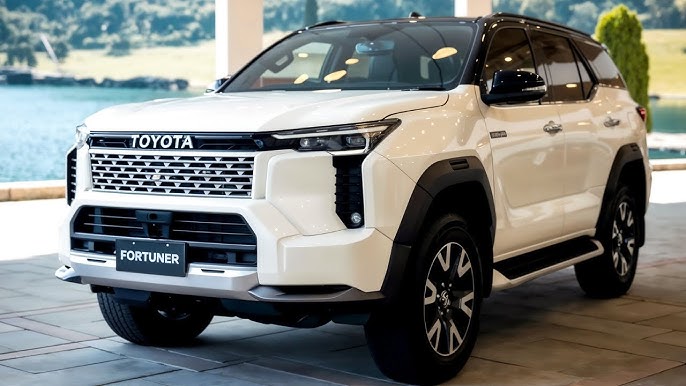
At a time when the Indian auto industry is rapidly shifting towards electrification and stricter emission norms, Toyota has made it clear that diesel engines are not exiting overnight. The Japanese carmaker has confirmed that diesel powertrains will continue to play an important role in select segments, especially in large SUVs like the Toyota Fortuner and pickup trucks such as the Hilux.
Responding to questions about the future of diesel in India, Sabari Manohar, Group Head – Customer Service at Toyota Kirloskar Motor, highlighted that customer demand for diesel remains strong in specific categories. According to him, diesel buyers are deeply loyal, particularly in high-torque, long-distance vehicles. His comment summed up Toyota’s stance clearly: “There are hardcore fans for diesel. Diesel is diesel.”
Toyota’s 2.8-litre diesel engine to continue beyond 2027
Toyota has indicated that while some diesel engines will be phased out due to upcoming regulations, its larger and more powerful 2.8-litre diesel motor will continue well beyond 2027. This engine currently powers the Fortuner and Hilux and is seen as well-suited to meet customer expectations in premium SUVs and lifestyle utility vehicles.
However, the same will not apply to all diesel models. With the introduction of CAFE 3 (Corporate Average Fuel Efficiency) norms in 2027, Toyota will discontinue the Innova Crysta. The MPV, which relies entirely on diesel power, was initially planned to exit the market earlier, but strong demand and supply constraints of the Innova Hycross led Toyota to extend its lifecycle.
Once the Crysta is phased out, Toyota will effectively drop its 2.4-litre diesel engine from the Indian lineup, leaving the 2.8-litre unit as its primary diesel offering.
Hybrid push to balance stricter emission norms
To prepare for tighter CO2 and fuel efficiency targets, Toyota has already begun adjusting its strategy. The company recently introduced a mild-hybrid system in the Fortuner, aimed at improving efficiency and emissions. Alongside this, Toyota is aggressively expanding its strong-hybrid portfolio, led by models like the Innova Hycross.
Hybrid vehicles benefit from regulatory incentives and ‘super credits’ under CAFE norms, making them a crucial pillar of Toyota’s compliance strategy going forward. Rather than abruptly discontinuing internal combustion engines, Toyota prefers a gradual and balanced transition across diesel, petrol, hybrid and electric powertrains.
Diesel demand in India remains steady
Despite the EV narrative gaining momentum, diesel demand in India has not collapsed. In fact, diesel-powered passenger vehicles saw a marginal rise in market share, increasing from 17.93 percent in 2024 to 18.33 percent in 2025. This growth has been largely driven by midsize SUVs and premium SUVs.
Models like the Hyundai Creta and Toyota Fortuner continue to attract diesel buyers who prioritise torque, highway cruising ability, towing capacity and durability. According to Toyota, demand patterns vary widely by region and usage, with diesel still being the preferred choice in many parts of the country.
Toyota believes diesel will decline gradually, not suddenly
Toyota does not expect diesel adoption to decline uniformly across India. Regulatory conditions in regions like NCR have created challenges, but nationwide demand remains fragmented rather than collapsing. The company sees strong demand for hybrids, steady demand for ICE vehicles, and hopes to build EV demand over time.
Toyota has also stressed the importance of regulatory clarity before making drastic powertrain decisions. Instead of sudden exits, the brand supports a calibrated, step-by-step transition that aligns with customer needs, real-world usage, and long-term policy direction.
For buyers wondering whether the Toyota Fortuner diesel will survive beyond 2027, the answer appears to be yes. Diesel is still very much alive in Toyota’s premium SUV strategy.